

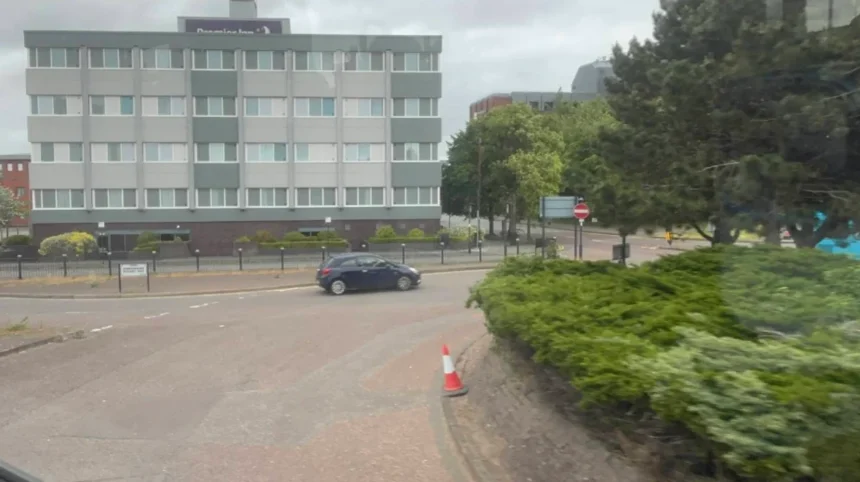
Birkenhead is an ideal day trip from Liverpool because it combines world-class industrial heritage, pioneering urban architecture, and extensive waterfront parks within a short transit across the River Mersey. The town features the oldest publicly funded civic park globally, the highest concentration of Grade I listed buildings outside London, and historic transportation links.
Situated directly across the River Mersey on the Wirral Peninsula, Birkenhead offers an accessible cultural alternative to central Liverpool. Transport connections allow visitors to reach the town center in under ten minutes by train via the Merseyrail underground network or via a scenic crossing on the famous Mersey Ferry.
The town established major urban engineering benchmarks during the nineteenth century. Landscape architect Sir Joseph Paxton designed Birkenhead Park, opening the site in April 1847 as the world’s first municipal public park funded by local taxpayers. American landscape architect Frederick Law Olmsted later used Paxton’s layout as the direct structural template for Central Park in New York City.
Architectural interest continues at Hamilton Square, a Georgian residential quadrangle built between 1825 and 1847 according to designs by Scottish architect James Gillespie Graham. The square contains the largest collection of Grade I listed terrace houses in England outside of London’s municipal boundaries.
Industrial tourism is defined by the historical remnants of Cammell Laird shipyard, the historic Woodside Ferry Terminal, and the Birkenhead Priory, which stands as the oldest surviving standing building in Merseyside.
Modern investment framework projects, such as the ongoing Wirral Waters scheme, continue to integrate maritime heritage with upgraded pedestrian promenades and cultural venues along the docks.
These diverse assets allow visitors to explore industrial, architectural, and natural attractions within a single compact geographic area.
How Do You Get to Birkenhead from Central Liverpool?
You can reach Birkenhead from central Liverpool using the Mersey Ferry from Pier Head, Merseyrail subterranean trains from Lime Street or Central Stations, or road vehicle routes through the Queensway Tunnel. Transit times range between four minutes by train and twenty minutes by cross-river ferry.
The Mersey Ferry provides a direct water transit operating between Liverpool’s Pier Head and Woodside Ferry Terminal in Birkenhead. Morning and afternoon commuter departures run at fixed intervals, while dedicated river explorer cruises run hourly, incorporating audio commentary detailing the maritime history of the Mersey estuary.
Rail connections are operated by Merseyrail along the underground Wirral Line. Direct passenger services run continuously from Liverpool Central, James Street, Moorfields, and Lime Street Low Level stations. Trains travel beneath the River Mersey through the subterranean railway tunnel completed in 1886.
Hamilton Square Station serves as the primary railway stop for central Birkenhead, with total tunnel transit taking approximately four minutes from James Street Station. Birkenhead Park Station provides direct access to the northern perimeter of the parkland.
Vehicular access across the river relies on the Queensway Tunnel, a four-lane road tunnel measuring 2.13 miles that opened in July 1934. Toll charges apply to motor vehicles passing through the tunnel plazas, which accept electronic contactless card payments and automated toll accounts.
Pedestrian cross-river movement relies entirely on passenger ferries, as the Queensway and Kingsway road tunnels strictly prohibit foot traffic and bicycles for structural safety. Local bus networks operated by Arriva Northwest link the Birkenhead Bus Station adjacent to the Grange Shopping Centre with outer Wirral districts, including Port Sunlight, New Brighton, and West Kirby.
Why Is Birkenhead Park Historically Significant globally?
Birkenhead Park is globally significant as the world’s first publicly funded municipal park, opening on April 5, 1847. Designed by Sir Joseph Paxton, its innovative layout directly influenced modern urban park design, providing the primary blueprint for Central Park in New York City.
Prior to the mid-nineteenth century, urban green spaces across Europe operated predominantly as private royal estates, enclosed hunting grounds, or restricted subscription gardens. Birkenhead Improvement Commissioners acquired 226 acres of marshy agricultural land in the 1840s, using public municipal funds to construct an accessible park designed specifically for public health and civic recreation.
Sir Joseph Paxton developed an intricate landscape architecture plan incorporating artificial lakes, curved internal carriage drives, expansive drainage networks, and surrounding residential villas. Paxton imported thousands of native and exotic plant species, creating varied topographical features using earth excavated during the creation of the twin lakes.
The Swiss Bridge, constructed in 1847, remains an iconic timber structure within the grounds, alongside the classical Grand Entrance lodge built in the Ionic architectural order.
In 1850, American landscape architect Frederick Law Olmsted visited Birkenhead Park during a tour of European agricultural and civic sites. Impressed by the park’s accessibility and open public access, Olmsted documented its operational model in his travel writings.
When the city of New York held a design competition for Central Park in 1858, Olmsted and Calvert Vaux incorporated Paxton’s core structural principles into their winning Greensward Plan. Key shared features include sunken roadways, naturalistic water bodies, winding pedestrian pathways, and peripheral perimeter plantings.
Birkenhead Park maintains its Grade I status on the National Heritage List for England and continues its formal campaign for UNESCO World Heritage Site recognition.
What Can Visitors Explore at Hamilton Square and Birkenhead Priory?
Visitors at Hamilton Square can view Georgian civic architecture and historical monuments centered around the Grade II listed Town Hall. Nearby, Birkenhead Priory offers exploration of twelfth-century monastic ruins, a dedicated chapel, and the historic St. Mary’s Church tower.
Hamilton Square represents one of the most complete planned Georgian urban developments in the United Kingdom. Designed by James Gillespie Graham, construction began in 1825 and finished two decades later. The square features grand stone-faced ashlar residential terraces characterized by symmetrical window rhythms, iron balconies, and classical entrance porticos.
At the center of the square stands the Birkenhead War Memorial, modeled after the Eleanor Crosses, alongside a statue honoring Laird shipbuilder John Laird.
The dominant architectural feature is the former Birkenhead Town Hall, built in 1887 using local storeton freestone and granite, featuring a clock tower rising 200 feet.
A ten-minute walk south leads to Birkenhead Priory, located on Priory Street overlooking the shipyards. Founded in 1150 by Benedictine monks under Hamon de Mascy, the site is the oldest surviving structure in Merseyside. Monks at the priory established the original cross-river Mersey Ferry service in 1150 to transport travelers toward Liverpool markets.
The surviving site includes the main monastic cloister, the vaulted scriptorium, the refectory, and the restored 14th-century St. Mungo’s Chapel.
The site also retains the surviving sandstone tower of St. Mary’s Church, erected in 1819 as Birkenhead’s first parish church. Visitors can climb the 101 steps of the church tower to access an observation deck providing clear views across the Cammell Laird docks, the River Mersey, and the Liverpool skyline.
The site includes a museum displaying medieval floor tiles, stone carvings, and industrial artifacts detailing regional shipbuilding.
What Art and Industrial History Highlights Exist in Birkenhead?
Birkenhead’s art and industrial heritage centers on the Williamson Art Gallery and Museum, which displays Victorian oil paintings, Della Robbia pottery, and historic maritime ship models. Additional highlights include preserved vintage tramways and maritime manufacturing legacy sites.
Situated in the leafy suburb of Oxton, the Williamson Art Gallery and Museum opened in 1928 following a financial bequest from local philanthropists Patrick and John Williamson. The single-story Neo-Georgian building houses an extensive collection of fine art, decorative art, and regional industrial items.
The gallery holds one of the UK’s largest public collections of Della Robbia pottery, an Arts and Crafts movement ceramic studio that operated in Birkenhead between 1894 and 1906 under the direction of Harold Rathbone and Conrad Dressler. The ceramic collection showcases distinctive glazed earthenware vessels, architectural plaques, and floral art tile displays.
The museum contains an extensive collection of maritime models detailing vessels constructed by Cammell Laird, including famous ships like the CSS Alabama, HMS Ark Royal, and the RMS Mauretania.
The gallery space also displays Victorian oil paintings, watercolors by Liverpool School artists, and modern British graphic art collections.
Industrial history exploration extends to the Wirral Transport Museum and Heritage Tramway located on Taylor Street. Birkenhead introduced the first street tramway system in Europe in August 1860, engineered by American entrepreneur George Francis Train.
The transport museum maintains a collection of fully restored operational double-decker trams from Liverpool, Birkenhead, Hong Kong, and Lisbon. The heritage tram line operates directly between the museum depot and the Woodside Ferry Terminal, giving visitors an authentic experience of 19th-century public transit along original street tracks.
Frequently Asked Questions
What is the fastest way to travel from Liverpool to Birkenhead?
The fastest travel method is taking the Merseyrail underground train from James Street or Lime Street stations directly to Hamilton Square Station. The train journey beneath the River Mersey takes approximately four minutes. Services run every five to ten minutes throughout the day, providing rapid transit across the river.
How does Birkenhead Park relate to Central Park in New York?
Birkenhead Park served as the direct design model for New York’s Central Park. American landscape architect Frederick Law Olmsted visited Birkenhead in 1850 and studied its public layout. He subsequently incorporated Joseph Paxton’s design concepts, including winding paths and artificial lakes, into the construction of Central Park.
Can you walk between the major attractions in Birkenhead?
Yes, central Birkenhead is pedestrian-friendly, with main landmarks located within walking distance of each other. Hamilton Square, Birkenhead Priory, and the Woodside Ferry Terminal sit within a ten-minute walking radius. Birkenhead Park is approximately fifteen minutes on foot from Hamilton Square, or two minutes by train to Birkenhead Park Station.
Is Birkenhead Priory free to visit for tourists?
Birkenhead Priory offers free entry to its historic grounds, museum displays, and preserved monastic buildings. Visitors can explore the 12th-century ruins and climb the 101 steps of St. Mary’s Church tower without purchasing an admission ticket. Operating hours vary seasonally, so checking schedule details prior to visiting is recommended.