

Key Points
- 108 criminals linked to drug and gun crime in Merseyside are serving a combined 851 years in prison following investigations by the Merseyside Organised Crime Partnership (OCP).
- The specialist team, formed in April 2021 by the National Crime Agency (NCA) and Merseyside Police, has seized cocaine, heroin, cannabis and ketamine worth up to £70m.
- Offences include importing drugs, supplying firearms and laundering money connected to serious and organised crime.
- In its first 12 months alone, the OCP seized 164kg of heroin (£16.4m), 137kg of cocaine (£10.96m), six firearms, 30kg of amphetamine, 80kg of cannabis and almost £1m in criminal cash.
- The partnership has shut down more than 150 county lines drug dealing networks, arrested over 700 offenders and protected more than 250 vulnerable children and adults from exploitation.
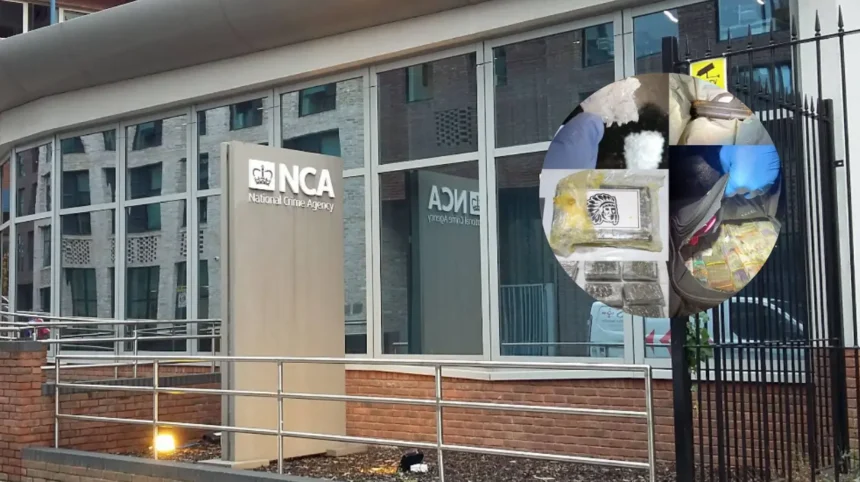
Liverpool Crime (Liverpool standard) — The Merseyside Organised Crime Partnership (OCP), a joint unit of the National Crime Agency (NCA) and Merseyside Police, announced on July 29, 2026 that 108 offenders are serving 851 years behind bars as a result of its investigations, with seized drugs and cash worth up to £70m removed from circulation.
More than 100 jailed as £70m in drugs and firearms are seized
The OCP, launched in April 2021 with government funding to target high-risk organised crime groups bringing drugs and firearms into Merseyside’s criminal markets, said those convicted were jailed for offences including importing drugs, supplying guns and laundering money linked to serious and organised crime.
According to the NCA and Merseyside Police, officers from the partnership have seized cocaine, heroin, cannabis and ketamine with a combined street value of up to £70m since the unit began operating. The scale of the seizures underscores the volume of Class A substances that had been entering the region before the specialist team intervened.
In its first 12 months, the OCP recorded several major successes: 164kg of heroin with an estimated street value of £16.4m and 137kg of cocaine worth £10.96m were taken off the streets, alongside six firearms, 30kg of amphetamine, 80kg of cannabis and £957,700 in criminal cash, as reported by the NCA. Those figures formed part of the wider tally that has now reached £70m in seized drugs and related assets.
Deputy Director Miles Bonfield of the National Crime Agency said the partnership’s results demonstrated the value of close collaboration between national and regional forces. “We are really proud of our partnership with Merseyside Police and the OCP’s superb results so far,” he said, according to the NCA’s account of the operation.
Merseyside Police highlighted that the unit had shut down more than 150 county lines drug dealing networks, arrested more than 700 offenders and protected more than 250 vulnerable children and adults from exploitation since the OCP was established. County lines refers to organised crime groups using mobile phone networks to move drugs from one area to another, often exploiting children and vulnerable adults as couriers.
How the Merseyside Organised Crime Partnership was formed
The OCP is the fourth organised crime partnership the NCA has jointly developed, following similar units created with the Metropolitan Police, Police Scotland and the Paramilitary Crime Task Force with the Police Service of Northern Ireland and HMRC.
Policing minister Kit Malthouse said at the launch in 2021 that the new scheme would “dismantle” gangs involved in high-harm crime. Merseyside Police stated that the new partnership would build on existing work to “intercept” and “shut down” so-called county lines drug dealing networks, with a particular focus on exploitation and the dealing of hard drugs.
The unit was set up after a tranche of government funding enabled the NCA to establish its third organised crime partnership in the region, complementing existing collaborations in London and Scotland. At the time, Merseyside Police said it had already shut down more than 150 county drug deal lines, arrested more than 700 offenders and protected more than 250 vulnerable children and adults from exploitation, and the OCP was intended to intensify that work.
Recent operations and wider context in Merseyside
The announcement comes amid a series of large-scale enforcement operations in Merseyside. In March 2026, Merseyside Police’s Project Medusa, working with the County Lines Taskforce, Operation Toxic and Operation Stonehaven, arrested 237 individuals and dismantled 17 drug networks during a County Lines Intensification Week.
During that week-long operation, officers seized more than 18kg of heroin, crack cocaine, cannabis, nitrous oxide and ketamine, along with £42,000 in cash and 35 weapons including daggers, zombie knives and imitation firearms, Merseyside Police said.
In July 2026, more than 300 officers took part in Operation Vanguard, conducting warrants, roadside checks and land searches in Liverpool, Wirral, Sefton, St Helens and Knowsley as part of a serious organised crime crackdown targeting drug trafficking, child sexual exploitation, violence and domestic abuse. The EVOLVE Everton–Vauxhall scheme, a Home Office-backed initiative introduced in January 2025, has delivered more than 115 arrests and seen the seizure of over 30 weapons, more than 100kg of drugs and nearly £150,000 in cash, according to Merseyside Police.
Separately, in June 2025, detectives uncovered a Skorpion sub-machine gun, two pistols, ketamine, cannabis and £86,000 in cash following an investigation that spanned more than two years and focused on organised crime in north Liverpool, Merseyside Police said. Five people were arrested on suspicion of various drug and firearms-related offences in that case.
Liverpool and surrounding areas in the North West have long been identified as significant hubs for guns and drugs trafficking. In 2020, officers from the NCA’s National Firearms Threat Centre found that 70% of all links to weapons examined in a major operation led to Liverpool, Manchester and surrounding areas of the North West.
Background to the development
The creation of the Merseyside Organised Crime Partnership in 2021 reflected growing concern over the role of North West organised crime gangs in the UK’s guns and drugs trade, and the particular harm caused by county lines networks that exploit vulnerable people. The NCA had already established similar partnerships in London and Scotland, and the Merseyside unit was designed to bring national-level resources and intelligence together with local policing knowledge to disrupt high-risk groups at scale.
Funding and policy support at national level enabled the deployment of specialist officers, surveillance capabilities and financial investigation expertise to a region where large quantities of Class A drugs and firearms had been moving through criminal markets. The partnership’s focus on county lines was intended both to reduce the supply of hard drugs and to protect children and adults being coerced into transporting them, a dynamic that has been repeatedly highlighted in Merseyside Police operations.
Over time, the OCP’s work has fed into a broader pattern of intensified activity in the region, including multi-agency operations such as Project Medusa, Operation Vanguard and the EVOLVE scheme, which have targeted serious violence, drug trafficking, exploitation and associated money laundering. The 851 years of prison time now being served by 108 offenders represents the cumulative judicial outcome of investigations, arrests and prosecutions flowing from that strategy.
Prediction: how this development may affect communities and organised crime in Merseyside
The scale of the OCP’s results 108 offenders jailed for a total of 851 years and up to £70m in drugs seized is likely to have several effects on different audiences in and around Merseyside.
For local communities, particularly in areas historically affected by county lines activity and gun crime, the removal of high-volume drug supply and firearms may reduce visible street-level dealing and associated violence in the short to medium term, according to the logic set out by Merseyside Police and the NCA in describing the partnership’s aims. The protection of more than 250 vulnerable children and adults from exploitation, as reported by the force, also points to a potential reduction in the number of young people drawn into criminal networks as couriers.
For organised crime groups operating in the region, the combination of long custodial sentences, large-scale seizures and sustained multi-agency pressure increases the financial and operational risks of running drug and firearms networks through Merseyside. That may deter some actors, disrupt existing supply chains and force others to adapt their methods, potentially shifting activity to different routes or modes of operation, as has been observed in previous national crackdowns on encrypted communications and trafficking networks.
For policymakers and law enforcement, the OCP model provides evidence that sustained, resourced partnerships between national and regional agencies can deliver measurable outcomes in terms of convictions, seizures and safeguarding. That may encourage further investment in similar structures in other regions, or an expansion of the OCP’s remit and resources to maintain pressure on evolving criminal markets.