
Key Points
- Five Metropolitan Police officers were injured when a marine policing unit boat collided with Westminster Bridge in central London.
- The incident occurred at approximately 3.40pm on Friday, July 24, 2026, with the vessel carrying armed officers.
- A number of officers entered the water following the crash but were recovered within around 10 minutes.
- Paramedics treated the injured on a rigid black inflatable boat moored to the side of the River Thames.
- The Metropolitan Police confirmed no members of the public were involved or injured in the incident.
- Emergency services, including fire crews and ambulances, responded to the scene, causing traffic standstill across the bridge.
- Two Chilean tourists, Cecilia Lusevic, 56, and her 12-year-old son Mateo Bilis-Lusevic, witnessed the crash from a Thames tour boat.
- The Metropolitan Police stated the circumstances will be thoroughly reviewed, with priority given to officer wellbeing.
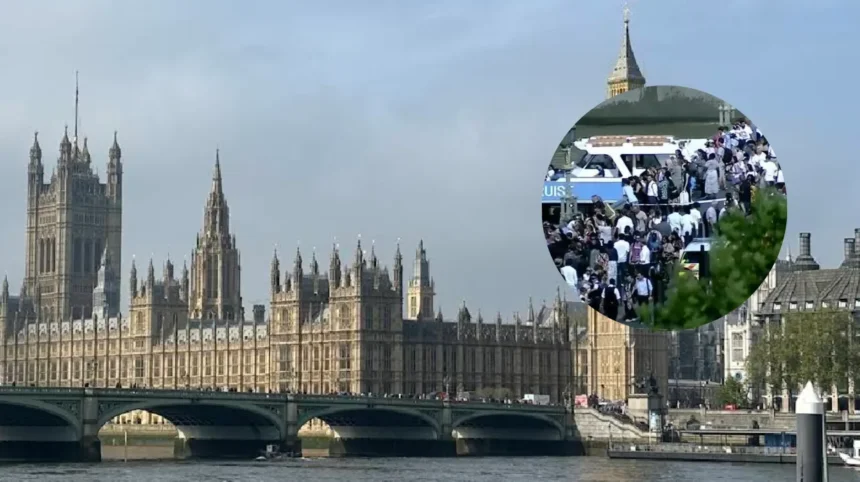
UK (Liverpool standard) July 24, 2026 – Five police officers have been injured after a marine policing unit vessel collided with Westminster Bridge in central London at around 3.40pm on Friday. The boat, which was carrying armed officers, struck the bridge structure overlooking the Houses of Parliament, prompting a major emergency response involving police, fire crews, and ambulances.
- Key Points
- How did witnesses describe the police boat collision on the Thames?
- What has the Metropolitan Police said about officer injuries?
- What emergency response was deployed to Westminster Bridge?
- Background of the Westminster Bridge police boat incident
- Prediction: How this development can affect London’s river policing operations
As reported by Sky News, the Metropolitan Police confirmed that a number of officers “entered the water, but were recovered” following the crash. Paramedics were seen treating the injured on a rigid black inflatable boat moored to the side of the River Thames, with ambulance and police cars positioned near the bridge.
In a statement, the Met said:
“We understand five officers were injured and are receiving treatment. We await an update on the extent of their injuries.”
The force added that at this stage, they do not believe any members of the public were involved or injured in the incident.
How did witnesses describe the police boat collision on the Thames?
Two Chilean tourists visiting the UK, Cecilia Lusevic, 56, and her 12-year-old son Mateo Bilis-Lusevic, provided eyewitness accounts of the incident. They were on a Thames tour boat on the north side of Westminster Bridge when they heard a loud bang as the crash occurred. They were evacuated from their vessel shortly afterwards.
Mateo told reporters:
“Two boats were riding extremely fast through the water. Suddenly, I heard a boom. I was looking towards the boat, and I heard a boom. Then three people went flying into the water and one of the people was really hurt.”
He added that the officers were in the water for around 10 minutes and a life ring was thrown for one of them by someone.
Images from the scene showed emergency services gathered on nearby Westminster Pier following the crash, with traffic across the bridge at a standstill. A police boat was later seen being towed by a larger boat from the fire service.
What has the Metropolitan Police said about officer injuries?
The Metropolitan Police issued a statement addressing the incident and confirmed that five officers sustained injuries requiring treatment. According to the force, their immediate priority is the wellbeing of the officers involved.
The Met stated: “The circumstances of the incident will be thoroughly reviewed, but at this stage our priority is the wellbeing of the officers involved.” The force is awaiting further updates on the extent of the officers’ injuries and has not released additional details about their conditions.
Emergency services responded rapidly to the scene, with a large number of police officers, fire crews, and ambulances deployed. The incident caused significant disruption to traffic across Westminster Bridge, which overlooks the Houses of Parliament in central London.
What emergency response was deployed to Westminster Bridge?
A substantial emergency response was mobilised following the collision between the police marine unit vessel and Westminster Bridge. Fire crews, ambulances, and multiple police units were on the scene, with paramedics treating injured officers on a rigid black inflatable boat moored to the River Thames.
Images showed ambulance and police cars positioned near the bridge, with emergency personnel gathered on nearby Westminster Pier. The fire service deployed a larger boat that was later seen towing the damaged police vessel away from the scene.
Traffic across Westminster Bridge was brought to a standstill as emergency services managed the incident. The bridge’s location overlooking the Houses of Parliament made the response particularly visible, with numerous emergency vehicles and personnel present throughout the afternoon.
Background of the Westminster Bridge police boat incident
Westminster Bridge is a major thoroughfare in central London, connecting Westminster on the north side of the River Thames to Lambeth on the south. The bridge overlooks the Houses of Parliament and is one of London’s most recognisable landmarks. The Metropolitan Police operates a marine policing unit that patrols the Thames, providing security and emergency response capabilities on the river.
Marine policing units in London are equipped with armed officers and specialised vessels designed for rapid response on the waterway. These units regularly conduct patrols and respond to incidents along the Thames, which runs through central London. The incident on July 24, 2026, represents a rare occurrence involving a police vessel colliding with infrastructure on the river.
The Metropolitan Police has stated that the circumstances surrounding the crash will be thoroughly reviewed. Such reviews typically examine operational procedures, vessel handling, and any contributing factors to prevent similar incidents in the future.
Prediction: How this development can affect London’s river policing operations
This incident is likely to prompt a comprehensive review of Metropolitan Police marine unit operations and safety protocols on the Thames. The injury of five officers in a single incident may lead to enhanced training requirements for boat operators, revised navigation procedures near bridges and other infrastructure, and potentially updated equipment standards for marine policing vessels.
The absence of public injuries in this incident may be viewed positively by authorities, but the injury of multiple officers could affect operational readiness in the short term while the force assesses the impact on personnel. The Metropolitan Police may implement additional safety measures for marine operations, particularly in high-traffic areas of the Thames near central London landmarks.
For London’s river policing operations, this development could result in temporary adjustments to patrol patterns while the review is conducted. The incident may also influence future investment in marine policing equipment and training, with emphasis on collision avoidance and emergency response procedures. The Metropolitan Police’s commitment to reviewing the circumstances suggests that operational changes may be implemented to prevent recurrence.