

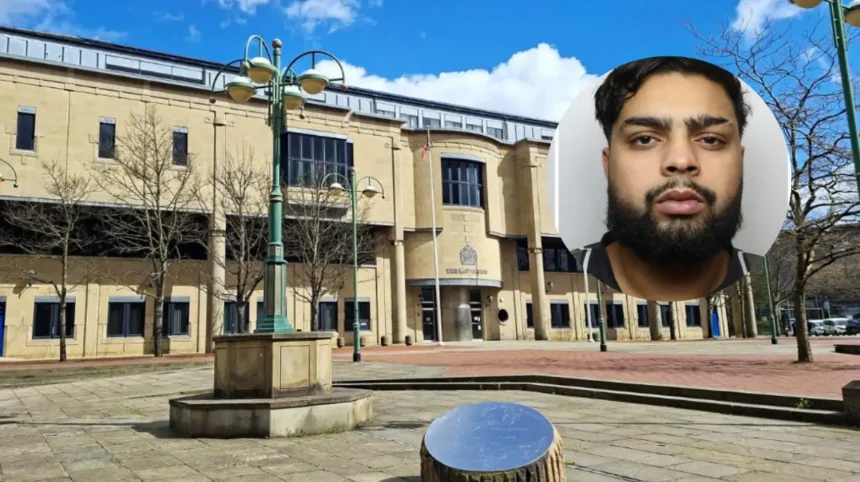
Key Points
- Mohammed Samee (21), Zaid Khan (20) and a 17‑year‑old youth were jailed after kidnapping a man, burning him and blackmailing him for money in Bradford.
- The victim was abducted from Thornton Road in Allerton on 18 November 2025 and taken to Attock Park in Bradford Moor, where he was burned and threatened.
- The ordeal lasted around two hours and involved “torture‑style violence”, a weapon, theft and extortion‑type demands.
- All three defendants pleaded guilty to kidnap on the first day of trial on 18 May 2026.
- Samee was sentenced to six years and six months; Khan to three years and two months; the youth to a 24‑month detention and training order.
- Judge Ahmed Nadim described the crime as “serious, planned, and prolonged” and said it had a profound effect on the victim and his family.
- Each offender received a 10‑year restraining order banning any contact with the victim.
- The court heard that at least five people were involved in planning the abduction, though only three appeared in court.
UK (Liverpool standard) July 11, 2026 – Bradford Crown Court sentenced three men and a youth after they kidnapped a male victim, tortured him by burning him and blackmailed him for cash. Mohammed Samee, 21, of no fixed abode but formerly of Moor View Drive, Bradford, was jailed for six years and six months. Zaid Khan, 20, of no fixed abode but previously of Greenhill Lane, Bradford Moor, received three years and two months. A 17‑year‑old youth, who cannot be identified for legal reasons, was handed a 24‑month detention and training order.
- Key Points
- How did the kidnapping and burning take place in Allerton and Bradford Moor?
- Who was responsible and what did the judge say about each offender?
- What was the impact on the victim and his family?
- What did the court say about the planning and scale of the offence?
- Background of the development
- Prediction: How this development can affect communities and potential victims in Bradford
How did the kidnapping and burning take place in Allerton and Bradford Moor?
According to evidence heard at Bradford Crown Court, the victim was abducted from Thornton Road in uk/local/allerton/">Allerton on 18 November 2025 and taken to Attock Park in Bradford Moor. There he was burned, beaten and pressured into obtaining money to secure his release. The detention lasted at least two hours and involved “torture‑style violence” including deliberate burning, the use of a weapon, theft and extortion‑ or blackmail‑type demands.
As reported in the court summary, His Honour Judge Ahmed Nadim said:
“This was a serious, planned, and prolonged kidnapping carried out by a group acting together. The victim was abducted from a public street, transported to a secondary location, subjected to repeated violence including deliberate burning, and then pressured into obtaining money to secure his release. Needless to say, the offence was terrifying for the victim and has had a profound effect on him and his family”.
Who was responsible and what did the judge say about each offender?
Judge Nadim said each of the three had, to varying degrees, distanced themselves from what had happened after the kidnap in Allerton. Addressing the group as a whole, he noted that the offence was planned, involved a targeted abduction and group offending by at least five people, although only three faced court.
Sentencing Samee, Judge Nadim said:
“You directly bear the greatest responsibility of the offenders before the court for what happened to the victim.”
Addressing Khan, the judge said:
“You did not take part in events that occurred after Attock Park.”
Of the youth’s involvement, Judge Nadim said:
“Whilst it is acknowledged by you that you bear responsibility by what happened to the complainant by way of a joint enterprise, it is a fact of the case that you did not participate in burning of the victim at the material time. In fact, you were waiting outside the car”.
What was the impact on the victim and his family?
The court heard that the victim was “enduring psychological trauma and fear” and that the offence had had a profound effect on him and his family. Judge Nadim emphasised that the kidnapping was terrifying for the victim and warned that the offenders’ criminal conduct had damaged their own life prospects while causing “a great deal of distress, shame, and embarrassment to your family”.
The judge added: “Your family members invested hope and aspirations in your future. You have betrayed that investment. In each of your cases I accept that you regret your actions.” All three defendants were made subject to a 10‑year restraining order banning them from any contact with the victim, who was said to be still enduring psychological trauma and fear.
What did the court say about the planning and scale of the offence?
The court heard that the offence was planned, involving a targeted abduction and group offending by at least five people, although only three found themselves in court. The detention of the victim lasted at least two hours and involved “torture‑style violence” involving burning, and a weapon was used. The incident also involved theft, and it was aggravated by what Judge Nadim described as “extortion/blackmail‑type demands”.
All three defendants pleaded guilty to kidnap on the first day of trial on 18 May 2026. The judge noted that each had tried to distance themselves from the events after the initial abduction but stressed that the seriousness of the crime required substantial punishment.
Background of the development
This case follows a series of high‑profile kidnapping and violent robbery cases in West Yorkshire over the past few years, where groups have targeted individuals on public streets, moved them to secondary locations and used violence and threats to extract money. Local courts have increasingly treated such offences as serious joint‑enterprise crimes, with judges emphasising planning, group dynamics and the psychological impact on victims. The use of “torture‑style” violence, including burning, has been highlighted in recent sentencing remarks as an aggravating factor that justifies longer prison terms and strict restraining orders.
The sentencing at Bradford Crown Court reflects the judiciary’s approach to group kidnappings involving violence and extortion: offenders are held responsible not only for their direct actions but also for their role in the joint enterprise. Judge Nadim’s comments on family betrayal and long‑term damage to life prospects are consistent with recent guidance from senior judges in England and Wales on violent group crimes, which stress the need to protect victims and deter organised offending.
Prediction: How this development can affect communities and potential victims in Bradford
This ruling is likely to have several effects on local communities, potential victims and the wider criminal justice landscape in Bradford and surrounding areas:
- Increased caution among residents in Allerton, Bradford Moor and neighbouring estates – news of a planned, violent kidnapping on a public street may lead people to avoid walking alone late at night, especially in areas identified in the case such as Thornton Road and Attock Park. Community groups may push for more street lighting, CCTV and neighbourhood watch activity.
- Deterrence effect on similar group offending – substantial prison sentences for all three participants, including a youth given a detention and training order, signal that courts will not treat “secondary” roles lightly in kidnapping and extortion cases. This could discourage some individuals from joining planned abductions, particularly where burning and weapons are involved.
- Stricter use of restraining orders and monitoring – the 10‑year restraining orders banning contact with the victim show that courts are willing to impose long‑term restrictions on offenders in violent cases. This may encourage victims of similar crimes to seek protective orders and may lead police to monitor identified offenders more closely, especially if they return to the same neighbourhoods.
- Psychological impact on families and extended communities – Judge Nadim’s emphasis on shame, embarrassment and betrayal of family hopes highlights how such crimes damage not only the victim but also wider family networks. In communities where extended families are closely linked, this can increase pressure on young people to avoid crime, but it may also create tension and stigma for families of offenders.
- Potential rise in reporting of kidnapping‑related violence – clearer messaging from the courts about how such offences are treated may encourage victims and witnesses to report similar incidents, including threats, blackmail and violent robberies that previously went unreported. This could lead to more prosecutions and a better understanding of the scale of group offending in the area.
- Long‑term risk for offenders – with prison terms of up to six and a half years and a 24‑month youth order, the three offenders will face significant disruption to education, employment and housing prospects. Their extended absence from the community may temporarily reduce local group crime, but their eventual release will require robust rehabilitation and monitoring to prevent reoffending, particularly if they return to the same neighbourhoods.
For residents of Bradford, especially young people in Allerton and Bradford Moor, the case reinforces the message that participating in planned kidnappings, even in a “secondary” role, can result in serious prison time and long‑term restrictions. For potential victims, it underlines the importance of staying alert in public spaces, avoiding isolated routes at night and reporting suspicious behaviour quickly to police.