

Key Points
- The University of Chester has installed a digital signage network covering more than 100 screens across its campuses in Chester, Warrington and Birkenhead.
- The system is designed to improve communication, wayfinding and student engagement across all sites.
- The network was developed by digital signage platform provider NowSignage and integrator Roche AV.
- Screens are placed in teaching spaces, communal areas and catering outlets to share student communications, campus updates and live event broadcasts.
- The university wanted consistent core messaging for all students while allowing each campus to share locally relevant content.
- Ben Dempsey Sawin, digital signage specialist at the University of Chester, said NowSignage helped create a more connected experience and remains simple to manage.
- Departments such as catering now use NowSignage access tags to manage only the screens, playlists and schedules relevant to their role.
- Mark Sargison, assistant director (LIS) – IT infrastructure at the University of Chester, said the system was intuitive, with little ongoing training required.
- The university has been using NowSignage since 2021 and regularly recommends the platform to others exploring signage solutions.
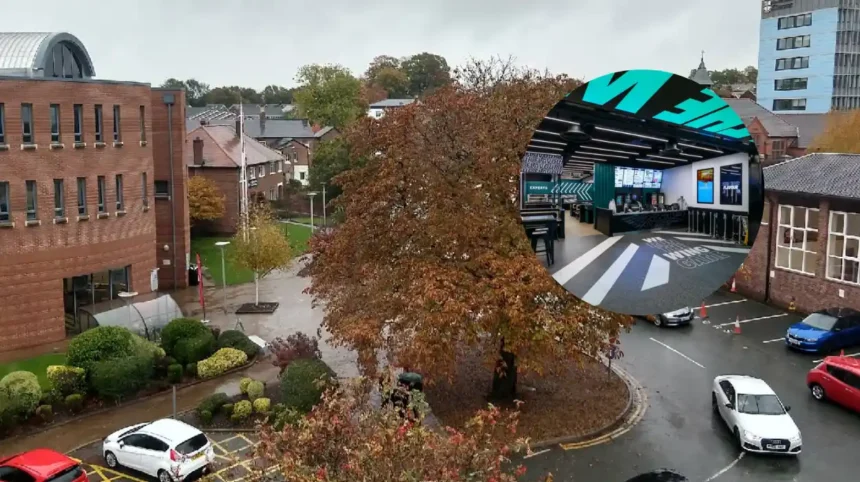
- The digital signage estate is expanding with outdoor displays, including a large LED screen being installed outside a new campus building.
- The outdoor display will support both signage content and live event streaming, extending communications beyond indoor environments.mediahelpingmedia+1
UK (Liverpool standard) July 07, 2026 – The University of Chester, a public university in Chester, England, has built a digital signage network spanning more than 100 screens across its campuses in Chester, Warrington and uk/local/birkenhead/">Birkenhead, centralising communication while allowing localised content for each site. The University of Chester has deployed a large-scale digital signage network that links its three main campuses through more than 100 screens, creating a unified communications channel for students, staff and visitors while still permitting each location to publish content tailored to its own audience.
- Key Points
- How is NowSignage being used to manage the University of Chester signage network?
- What has the University of Chester said about user experience and training?
- How is the University of Chester expanding its digital signage estate with outdoor displays?
- Background: Development of the University of Chester Digital Signage Network
- Prediction: How This Development Can Affect Students, Staff and Local Communities
As reported by the University of Chester in an official press release, the network was developed by digital signage platform provider NowSignage and integrator Roche AV, and is now помогать (helping) improve communication, wayfinding and student engagement across teaching spaces, communal areas and catering outlets.
The university said in the release that the signage network allows it to ensure students receive the same core information regardless of which campus they are on, while individual campuses can still share content relevant to their own audiences, balancing consistency with local relevance.
The University of Chester identified a need to standardise key messages across its分散 (dispersed) campuses while preserving flexibility for local updates. According to the press release, the university wanted to ensure students received the same core information regardless of location, yet still allow individual campuses to share content relevant to their own audiences, addressing both consistency and localisation challenges.
By placing screens throughout teaching spaces, communal areas and catering outlets, the university aims to provide student communications, campus updates and live event broadcasts in real time, improving wayfinding and reducing reliance on fragmented channels such as email, noticeboards or social media alone.
How is NowSignage being used to manage the University of Chester signage network?
As reported by Ben Dempsey Sawin, digital signage specialist at the University of Chester, in the university’s press release,
“NowSignage has helped us create a more connected experience across our campuses. Even though NowSignage has grown over the last five years, the platform remains simple to manage and easy for teams across the university to use.”
The university further explained in the release that, as the signage network has grown, individual departments have been able to take greater ownership of content management. Using the NowSignage access tags functionality, teams such as catering can view and manage only the screens, playlists and schedules that are relevant to their role, enabling decentralised control without compromising overall governance.
What has the University of Chester said about user experience and training?
Mark Sargison, assistant director (LIS) – IT infrastructure at the University of Chester, stated in the press release: “We initially expected to have to provide ongoing training and support across departments, but our users have found the system intuitive and simple to use.”
Sargison added that the university has been using NowSignage since 2021 and has been consistently impressed, recommending the platform to others exploring new signage solutions. He noted that the NowSignage team have always been receptive to the university’s feedback and ideas, and that the institution looks forward to seeing how the platform evolves.
How is the University of Chester expanding its digital signage estate with outdoor displays?
The University of Chester is expanding its digital signage estate with the introduction of outdoor displays, including a large LED screen currently being installed outside a new campus building. According to the press release, the display will support both signage content and live event streaming, extending communications beyond indoor environments.
This move signals a shift from purely internal communications to a hybrid model that reaches students and visitors in outdoor spaces, potentially increasing visibility of campus events, emergency messages and key announcements in areas where fixed indoor screens cannot reach.
Background: Development of the University of Chester Digital Signage Network
The digital signage initiative at the University of Chester builds on a multi-year rollout that began in 2021, when the university first adopted the NowSignage platform. Over subsequent years, the number of connected screens grew steadily, allowing more departments to participate in content management and encouraging a culture of decentralised communication.
The current phase, which spans more than 100 screens across three campuses, represents a significant scaling of that earlier work. By integrating wayfinding, student communications and live event broadcasts into a single network, the university has created a more visible and accessible communication infrastructure that supports both day-to-day operations and special events.
The upcoming addition of outdoor LED displays further extends this evolution, moving the network from a predominantly indoor system to one that also serves external spaces, aligning with broader trends in higher education where institutions use digital channels to enhance campus experience, safety and engagement.
Prediction: How This Development Can Affect Students, Staff and Local Communities
For students, the expanded digital signage network is likely to improve access to timely information about lectures, campus events, transport updates and emergency notices, potentially reducing confusion and missed opportunities. With screens placed in teaching spaces, communal areas and catering outlets, students can expect more consistent messaging across campuses, while still benefiting from location-specific content tailored to Chester, Warrington or Birkenhead.
For staff and university departments, the ability to manage screens and playlists through access tags means greater autonomy over communications without heavy reliance on central IT teams. This can lead to faster updates, more relevant content for specific audiences and a more responsive communication culture. However, it also requires departments to maintain clear editorial standards to avoid inconsistent or conflicting messages across the network.
For local communities and visitors, the introduction of outdoor LED displays could make the university more visible as a civic actor, sharing information about public events, community partnerships and safety messages. If the university uses these screens responsibly, they could strengthen ties with local residents and businesses, while also enhancing the overall campus atmosphere and sense of place. Over time, this digital signage infrastructure may become a benchmark for other UK universities considering similar networked communication approaches.