
Key Points
- Public consultation has begun on a proposed 430‑acre Mayoral Development Corporation (MDC) covering Liverpool North Docks.
- The MDC will be the city region’s first mayoral development corporation, created to accelerate brownfield regeneration.
- The redevelopment plan aims to deliver around 17,000 new homes and 5 million square feet of commercial space over 15 years.
- The site includes Central Docks, King Edward Triangle, parts of Peel Waters, and the stalled Pall Mall office complex.
- The MDC will have powers over planning coordination, land assembly, infrastructure delivery and innovative financing tools.
- Liverpool City Council’s cabinet agreed to the MDC proposals in December 2025, a key step before consultation.
- The development is separate from, but complements, the Liverpool North New Town Project covering Everton, Anfield and Bootle.
- Existing brownfield funding, including £55–£56 million in government grants for Central Docks, is already supporting early infrastructure.
- The MDC is expected to work under bespoke governance linking Liverpool City Council and the Liverpool City Region Combined Authority.
- Steve Rotheram, mayor of the Liverpool City Region, has described the MDC as a “game changer” for the north docks area.
- Liam Robinson, leader of Liverpool City Council, said the project would create “genuine opportunities” for residents and businesses.
- The consultation invites residents, businesses and stakeholders to shape the scale, design and community priorities for the new waterfront quarter.
Liverpool City Centre (Liverpool standard) – July 02, 2026 – Consultation has officially opened on a major new regeneration framework for Liverpool’s northern waterfront, centred on a proposed 430‑acre Mayoral Development Corporation (MDC) that seeks to transform decades‑unused brownfield land into a mixed‑use quarter of homes, jobs and public space.
- Key Points
- Why Is the City Creating Its First Mayoral Development Corporation?
- What Scale of Development Is Planned for the North Docks?
- How Will the MDC Use New Powers to Accelerate Regeneration?
- What Does the Consultation Ask the Public to Consider?
- How Does This Fit With Wider Liverpool Waterfront Plans?
- Background: How the North Docks MDC Developed
- Prediction: How This Development Could Affect Liverpool Residents, Businesses and Investors
As reported by the editorial team at Place North West, the consultation marks the first formal opportunity for the public to influence the shape of the MDC, before detailed development plans are taken forward. The project is being led by the Liverpool City Region Combined Authority and Liverpool City Council, with mayor Steve Rotheram championing the MDC as a mechanism to “fast‑track” regeneration around the new uk/local/everton/">Everton stadium at Bramley‑Moore Dock.
Why Is the City Creating Its First Mayoral Development Corporation?
The MDC is intended to overcome long‑standing barriers that have slowed investment in the North Docks, including fragmented land ownership, complex planning processes and under‑delivered infrastructure. As reported by Place North West, the MDC will operate under bespoke governance that ensures close collaboration between Liverpool City Council and the Combined Authority.
Liam Robinson, leader of Liverpool City Council, said the revitalisation of the 174‑hectare area, primarily consisting of brownfield land, would generate “genuine opportunities” for both residents and businesses. He added that the MDC would guarantee that regeneration occurs more swiftly, benefits local communities and fosters sustainable growth for the entire city region.
What Scale of Development Is Planned for the North Docks?
The vision set out for the MDC area includes approximately 17,000 new homes and 5 million square feet of commercial space over the next 15 years, according to council and combined authority statements. These figures build on earlier assessments that identified potential for more than 17,700 homes and 5 million sq ft of commercial space within the broader North Docks area.
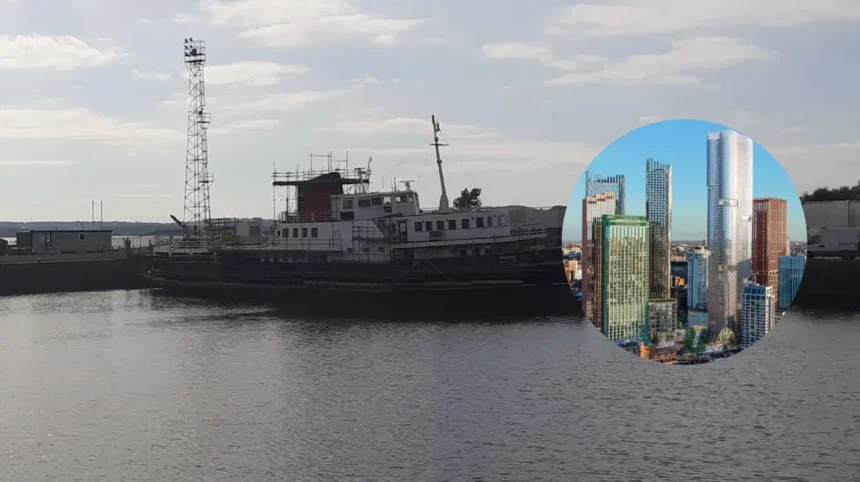
The development zone is expected to cover key sites along the North Docks, including Peel Waters’ Central Docks, Beetham and TJ Morris’s King Edward Triangle, and the stalled Pall Mall office complex, as reported by Place North West. The project is designed to work alongside, but remain separate from, the Liverpool North New Town Project, which focuses on new neighbourhoods and improved housing and infrastructure beyond the immediate waterfront.
How Will the MDC Use New Powers to Accelerate Regeneration?
The MDC will be equipped with powers to coordinate development, including accelerated planning procedures, land assembly tools, streamlined statutory planning decisions and dedicated teams for infrastructure delivery, as outlined in council reports. It will also be able to use innovative financing mechanisms to support major infrastructure such as transport links, utilities and public realm improvements.
Neil Hodgson of The Business Desk reported that the cabinet decision to agree the MDC proposals was described as a “historic moment for the North Docks”. The article notes that the MDC will be integral to the regeneration of the North Docks area and will operate under a governance model designed to ensure close collaboration between the council and the Combined Authority.
What Does the Consultation Ask the Public to Consider?
The consultation invites residents, businesses and other stakeholders to comment on the scale, design language, community facilities and accessibility priorities for the new quarter. Place North West states that the consultation is the first step in a process that will shape how the MDC area is developed, including the mix of housing types, employment spaces and public amenities.
Among the issues likely to be raised are how to connect the new neighbourhood with the city centre, Princes Dock and the Everton stadium, how to ensure affordable housing is delivered, and how to protect and enhance the waterfront’s historic character while allowing for modern development. Early infrastructure work, including the creation of public parks and new thoroughfares, is already supported by brownfield grants amounting to £55–£56 million for Central Docks, as reported by the BBC and Liverpool City Council.
How Does This Fit With Wider Liverpool Waterfront Plans?
The North Docks MDC is part of Liverpool’s broader 20‑year vision for its iconic waterfront, which also includes Paddington Village, the redevelopment of the Tobacco Warehouse and the new Everton stadium as a catalyst for regeneration, according to multiple sources. The MDC complements the Liverpool North New Town Project, which aims to create new neighbourhoods and improve housing and local infrastructure across Everton, Anfield, Kirkdale and Bootle.
Steve Rotheram has framed the MDC announcement as a “game changer” that will unlock significant investment and jobs while supporting the region’s housing ambitions, as noted in a combined authority post on LinkedIn. The devolved housing settlement of £700 million for the region, announced alongside the MDC plans, is expected to further support delivery of new homes across the city region.
Background: How the North Docks MDC Developed
The North Docks MDC originated from a series of strategic decisions and funding commitments over several years. In November 2024, the UK government approved £56 million in infrastructure funding for Central Docks, a key neighbourhood within the Liverpool Waters district, to support around 2,350 new homes and a major public park, as reported by the BBC. This funding was part of a national programme to unlock stalled brownfield housing schemes and attracted more than £550 million in expected private investment.
In December 2025, Liverpool City Council’s cabinet formally agreed to proposals for a Mayoral Development Corporation covering the North Docks, marking a critical milestone in accelerating regeneration on the northern waterfront, according to The Business Desk and Place North West. The decision established the MDC’s governance framework and positioned it as an independent but closely coordinated body working with both the council and the Combined Authority. Early in 2026, detailed development plans and consultation documents were unveiled, setting out the ambition for 17,000 homes and 5 million square feet of commercial space and confirming the MDC’s role in delivering infrastructure and planning coordination.
Prediction: How This Development Could Affect Liverpool Residents, Businesses and Investors
For local residents in Everton, Kirkdale and surrounding areas, the MDC could bring significant new housing supply, including potential affordable homes, alongside improved public spaces, transport links and community facilities. If implementation follows the stated ambition, thousands of new jobs in construction, retail, services and commercial sectors may be created, offering employment opportunities for people already living in the north of the city.
Local businesses and investors could benefit from a clearer, faster planning environment and from infrastructure improvements that make the North Docks more accessible and attractive. The presence of the new Everton stadium is expected to increase footfall and demand for hospitality, leisure and retail, which the MDC aims to harness through coordinated commercial development. However, the scale of change also carries risks, including potential pressure on housing prices and displacement if affordable housing and community protections are not adequately embedded in MDC plans.
For students and young professionals in cities like Islamabad considering international opportunities, the North Docks MDC illustrates how large‑scale urban regeneration can reshape a city’s economy and housing market over a decade. The Liverpool example shows that coordinated public‑private frameworks, backed by devolved funding and new planning powers, can unlock brownfield land at a scale that individual developers or local authorities alone might not achieve.