
Key Points
- Demolition Application Filed: Halton Council has formally applied to its own planning department for permission to demolish its seven-storey Municipal Building in Widnes.
- Delayed Timeline: According to planning documents prepared by Cassidy + Ashton, the physical flattening of the Kingsway landmark is not scheduled to begin until January 2028.
- Asset Redevelopment: Once the building is cleared, the 0.8-acre brownfield site will be sold off to private developers to generate capital.
- Severe Financial Pressures: The local authority faces a projected £1.2m budget overspend for the current financial year, despite securing £30m in exceptional financial support from the central government.
- High Estate Maintenance Costs: An independent operational review conducted by JL Property Solutions highlighted that Halton currently spends £10m annually to maintain its corporate property estate.
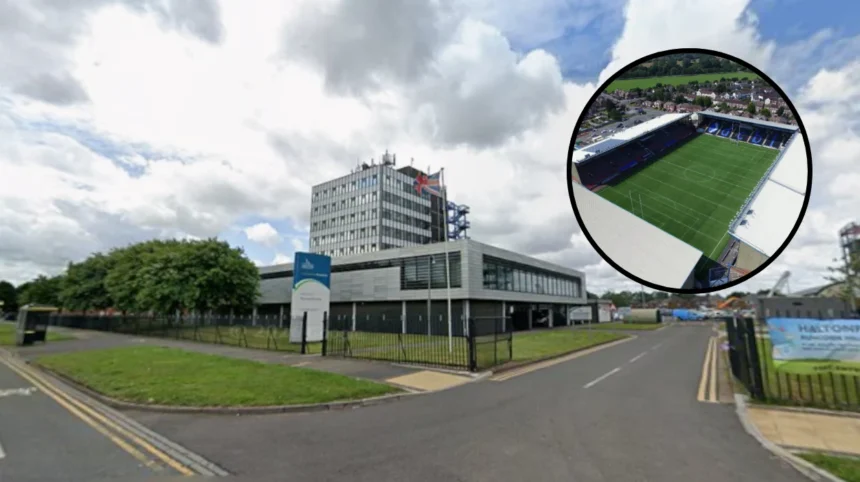
- Broader Cuts Under Consideration: As part of the same cost-cutting drive, reports from investigative media outlets reveal the council is also evaluating the sale of the 13,200-capacity DCBL Stadium.
Widnes (Liverpool Standard) June 15, 2026 – Halton Council has advanced its controversial cost-cutting strategy by submitting a formal planning application to demolish its own seven-storey Municipal Building headquarters on Kingsway, Widnes. The local authority is seeking permission to level the prominent civic structure to clear the way for a comprehensive commercial or residential redevelopment of the 0.8-acre site. The aggressive rationalisation of the council’s property portfolio comes at a time when local government budgets across the United Kingdom face unprecedented strain, forcing authorities to liquidate physical assets to balance their books. While the intent to vacate the building was signaled earlier this year, the submission of the official demolition paperwork marks a definitive logistical step forward, even as internal timelines reveal that the actual flattening of the civic hub will be deferred for several years to allow for operational relocation.
- Key Points
- Why Is Halton Council Demolishing Its Widnes Headquarters?
- What Are the Operational Costs of the Halton Council Estate?
- When Will the Demolition Work on the Kingsway Site Begin?
- What Will Happen to the Municipal Building Site After Demolition?
- How Can the Public Access the Halton Council Demolition Plans?
- Is the DCBL Stadium Also Being Sold by Halton Council?
The decision to raze the corporate headquarters is directly linked to a sweeping fiscal stabilization plan aimed at addressing a structural deficit that threatens the long-term viability of local public services. Investigative reporting across regional property and news outlets has highlighted that the council’s ongoing maintenance costs for its ageing civic buildings have become unsustainable. By consolidating staff into fewer, more energy-efficient locations and selling off high-value land parcels like the Kingsway site, Halton Council aims to permanently lower its fixed annual overheads. However, the move has triggered a wider debate regarding the future of municipal heritage, the efficiency of local government spending, and the potential offloading of other culturally significant community assets within the borough.
Why Is Halton Council Demolishing Its Widnes Headquarters?
The primary driver behind the radical proposal to dismantle the Kingsway Municipal Building is a profound financial crisis requiring immediate structural intervention. Writing for the regional development publication Place North West, senior property journalist Dan Whelan noted that Halton Council announced its initial intention to vacate and demolish its Widnes headquarters earlier this year as part of an aggressive, multi-pronged cost-cutting drive. The authority is grappling with escalating operational costs that have outpaced its traditional revenue streams from council tax and central government allocations.
According to municipal budget disclosures, the local authority is currently forecast to overspend on its budget for the financial year by an estimated £1.2m. This deficit persists despite the intervention of the central government, which provided a substantial lifeline in the form of almost £30m in exceptional financial support. Local government experts point out that such emergency funding packages are strictly temporary measures, forcing councils to find permanent methods to reduce their footprint. The seven-storey Municipal Building, featuring an expansive but ageing layout, represents a significant drain on liquid capital that the council argues it can no longer justify maintaining in an era of fiscal austerity.
What Are the Operational Costs of the Halton Council Estate?
The financial burden of running the borough’s civic infrastructure was laid bare in a comprehensive independent asset management review. As reported by local government correspondent Joanne Rayson of The Municipal Journal, an estate-wide evaluation conducted by independent consultants JL Property Solutions revealed that Halton Council currently spends a staggering £10m annually on its property estate. The review indicated that a disproportionate amount of this capital is absorbed by older, energy-inefficient structures that require frequent structural repairs and high utility expenditures.
By targeting the seven-storey Widnes HQ, the council expects to eliminate a massive portion of its fixed property management outgoings. Property analysts notes that modern agile working practices, accelerated by hybrid employment models within local government, have left many storeys of the Municipal Building underutilised. The consolidation of administrative staff into smaller, modernised hubs is projected to claw back millions of pounds over the coming decade, directly addressing the core inefficiencies highlighted by the JL Property Solutions data.
Explore More Halton Council News
Daresbury Hall Fire Revival Approved by Halton Council 2026
When Will the Demolition Work on the Kingsway Site Begin?
Despite the urgency of the council’s financial difficulties, the physical destruction of the building is not imminent. A detailed analysis of the official planning submission reveals a prolonged operational timeline designed to prevent sudden disruption to local civic functions. Reporting on the structural transition, local democracy reporter Thomas Moore for the Cheshire Live news network stated that according to a planning document prepared by architectural and planning consultancy Cassidy + Ashton and submitted alongside the application, demolition work on the Kingsway building will not begin until January 2028.
This built-in delay of nearly two years provides Halton Council with the necessary buffer to safely migrate its remaining administrative departments, public desks, and IT infrastructure to alternative facilities without a breakdown in statutory community services. The Cassidy + Ashton document outlines a meticulous phased decommissioning process, ensuring that environmental surveys, asbestos screening, and utility disconnections are fully executed before heavy machinery is brought to the Widnes site at the start of 2028.
What Will Happen to the Municipal Building Site After Demolition?
The ultimate objective of the demolition application is to convert an expensive public liability into a high-value private asset. In an editorial assessing the long-term urban design implications for the region, The Liverpool Echo’s civic affairs editor Liam Murphy reported that once the seven-storey building has been pulled down, the premium 0.8-acre town centre site would be immediately put on the open market and sold for private redevelopment.
The sale of the cleared land parcel is expected to generate a substantial capital receipt for Halton Council, which can be legally used to fund internal restructuring costs or pay down outstanding municipal debts. Local planning blueprints suggest that the location on Kingsway is highly attractive for mixed-use development, with potential options including high-density urban housing, modern commercial office spaces, or retail units. The council’s planning department will evaluate future private proposals against the borough’s broader economic regeneration priorities for the Widnes town centre.
How Can the Public Access the Halton Council Demolition Plans?
In accordance with statutory local government transparency laws, the complete documentation regarding the proposed leveling of the civic headquarters has been made accessible to residents, business owners, and independent stakeholders. As confirmed in an official public notice published by The Widnes Weekly News editorial team, individuals wishing to view the architectural blueprints, site boundaries, environmental impact assessments, and technical rationales can search for reference number 26/00205/DEM on Halton Council’s online planning portal.
The planning portal allows members of the public to formally submit observations, letters of support, or official objections regarding the demolition project during the standard statutory consultation period. Independent observers note that because the council is applying to itself for planning permission, the application will undergo rigorous internal scrutiny by an independent planning committee to ensure total compliance with regional environmental standards, traffic management protocols, and urban safety guidelines before any formal approval is granted.
Is the DCBL Stadium Also Being Sold by Halton Council?
The demolition of the Widnes headquarters appears to be just one component of a much wider, more systemic liquidation of public assets within the borough. In a investigative piece published by Place North West, regional editor Sarah Towns revealed that Halton Council was actively exploring the possibility of selling the DCBL Stadium, the highly valued 13,200-capacity sports complex that serves as the historic home ground for the Widnes Vikings Rugby League side.
The revelation regarding the potential offloading of the stadium has caused significant anxiety among local sports fans and community groups. Financial commentators state that while selling a major stadium asset would instantly inject millions of pounds into the council’s depleted accounts, it represents a politically sensitive gamble that could alienate the local electorate. The council’s willingness to put such a high-profile cultural venue on the table underscores the sheer severity of the economic pressures highlighted in the JL Property Solutions review, proving that no municipal asset is entirely safe from the current cost-cutting drive.