
Key Points
- Licence Under Threat: Collective on Seel Street, a prominent late-night venue hosting multiple distinct operators, faces a full regulatory review by Liverpool City Council that could strip its operational permissions.
- Core Crime Allegations: Local authorities initiated the probe following significant escalations in alleged crime, disorder, public safety hazards, and risks concerning the protection of children from harm.
- Hour Extension Conflict: Despite navigating active scrutiny over existing 3am operating hours, the management formally petitioned to push their nightly alcohol and trading provisions until 4am.
- Corporate Liquidations: Regulatory documentation confirms that The Soju Collective Ltd, the corporate entity originally granted the trading rights for the multi-venue space, has legally slid into liquidation.
- Concept Closures: Changing market conditions and shifted focus led to the permanent closure of constituent venues, including the popular corner site ‘Butter’, whose director noted its original concept had become washed out.
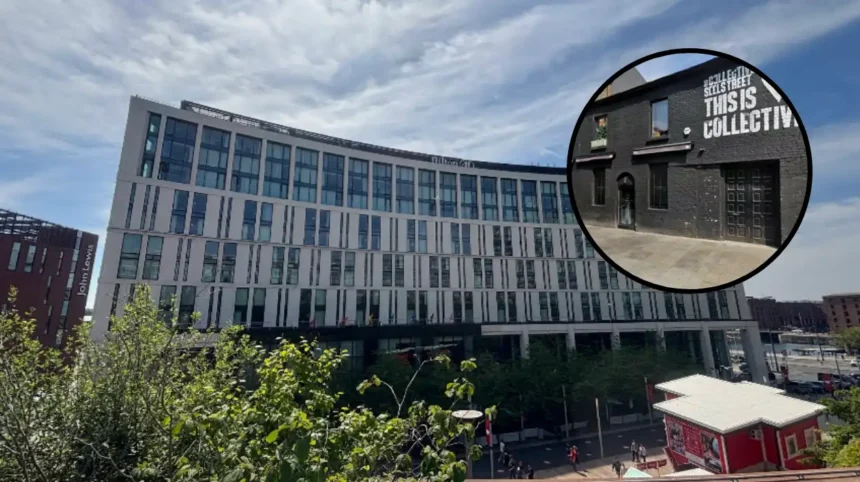
Liverpool (Liverpool Standard) June 5, 2026 – A 1920s-themed cocktail bar complex positioned at the heart of Liverpool’s premier nightlife district is facing a comprehensive municipal investigation that could ultimately result in the suspension or total revocation of its premises licence due to mounting concerns over localized crime and structural disorder. The multi-venue hospitality hub, operating under the umbrella branding of Collective on Seel Street, is currently the subject of an intense local authority probe designed to evaluate whether the business remains fit to serve the public. Having initially secured permissions to serve patrons until 3am daily, the establishment has drawn intense scrutiny from civic regulators and law enforcement agencies tasked with maintaining order in the metropolitan core.
The emergency review strikes at the center of Collective’s operational framework, a multi-layered complex spread across two interconnected buildings spanning 39-41 Seel Street and extending through to Slater Street. The sprawling commercial asset boasts several distinct independent sub-operators under its roof, most notably the 1920s-styled luxury establishment known as The Highball Club, which markets itself widely across social media platforms as “your favourite bartender’s favourite bar.” Liverpool City Council’s licensing and gambling sub-committee will shortly be mandated to rule over the ongoing conduct, safety protocols, and commercial viability of the business after formal administrative review proceedings were triggered by underlying security complications.
The regulatory clash is further compounded by a highly contentious, contradictory legal bid filed by the venue’s management team. While actively dealing with severe pushback from local authorities regarding existing operational vulnerabilities, the directors of Collective launched a fresh statutory application to the local council seeking to permanently extend their trading and alcohol windows until 4am every day of the week. This push for extended night-time hours has exacerbated tensions between the commercial goals of the Ropewalks district operators and the statutory mandates of metropolitan watchdogs.
Corporate Fractures and Legal Grounds
Why Has Liverpool City Council Triggered This Emergency Licence Review?
As reported by the local government correspondent of the Birkenhead News, official administrative notices published by Liverpool City Council explicitly state that the statutory grounds for launching the sweeping licence review are directly related to the critical “Licensing Objectives of the Prevention of Crime and Disorder, Public Safety, and the Protection of Children from Harm.” Under the strict parameters of the Licensing Act 2003, any failure to uphold these four foundational tenets grants local government bodies and police forces the outright authority to intervene, amend, or completely strip a commercial venue of its right to distribute alcohol and provide late-night entertainment.
Behind the immediate security anxieties lies a convoluted web of corporate distress and shifting financial structures that has fundamentally altered the management of the properties. Court and corporate filings show that three years ago, a comprehensive premises licence was officially assigned to an entity trading as The Soju Collective Ltd. However, according to formal records maintained by Companies House and verified within municipal documentation, that specific foundational corporate entity has since collapsed into insolvency and gone into liquidation. This structural transition has raised pressing regulatory questions regarding who holds direct day-to-day accountability for the physical site.
Despite the ongoing liquidation proceedings, the historical documentation shows the initial licence permitted the various sub-businesses operating across 39-41 Seel Street to trade intensely from 8am until 3am daily, with an absolute terminal closing time fixed at 4am for building clearance. It is widely understood within municipal planning teams that the complex maintains an expansive combined capacity of roughly 400 people at any given peak trading period, opening its doors from 5pm Monday through Thursday, and launching earlier from midday Friday through Sunday to capture the weekend market.
Explore More Liverpool Council
Mouse Infests Tuebrook Shop: £3k Court Bill L6 Continental 2026
Liverpool Parking Charges Up, Visitors Rise Liverpool 2026
Shifting Concepts and Venue Closures
How Have Internal Brand Closures Impacted Collective’s Operations?
The internal ecosystem of the Seel Street venue has faced significant volatility over the past several operating cycles, marked by the total collapse of major anchor brands within the building’s physical footprint. This includes the high-profile closure of the street-level bar ‘Butter’, an establishment that was previously situated on the highly visible corner intersection of Slater Street and Seel Street. The bar served as a major point of entry for the wider building, and its sudden departure altered the flow of crowds and security management within the shared commercial space.
As reported by investigative journalists covering the region’s commercial entertainment sectors for the Birkenhead News, it was confirmed that Butter would permanently close its doors after a turbulent three-year run in the city center. In an official public statement posted directly to the venue’s social media accounts, Fred Hobbs, the managing director of the establishment, stated that the overarching management of Collective had collectively taken the “difficult decision” to shutter the venue permanently.
Elaborating further on the deep structural and conceptual issues that precipitated the financial downfall of the corner bar, Mr Hobbs stated that the site’s “original concept” had become entirely “washed out” amidst a fiercely competitive local market, leading management to conclude that they could no longer dedicate the necessary resources or give Butter the hyper-focused attention it rightfully deserved. While the Highball Club continues to push forward with signature cocktail menus, late-night DJs, and a lively retro atmosphere, the physical space left behind by Butter remains empty, clouding the architectural future of the site as the licensing committee prepares its ruling.
Strict Regulatory Conditions
What Enforcement Measures Form Collective’s Existing Legal Framework?
The venue is currently legally bound to a highly restrictive set of operational parameters laid out within the Liverpool City Council Premises Licence Register. These conditions were designed to act as a preventative wall against localized crime, making any documented deviation from them a massive liability during an active council probe.
The physical infrastructure of the building is similarly governed by stringent acoustic conditions designed to insulate upper floors from structural vibration and noise. According to the Licensing Act 2003 register data, the operators are required to maintain a detailed glazed acoustic lobby with self-closing doors, integrated sound limiters set firmly to not exceed NR45, and independent multi-layer ceiling board systems designed to ensure adjacent residential units do not register noise levels above NR30. Any systemic failure to police customer behavior inside the venue, or manage the external crowd dynamics on Seel Street, directly compromises these structural protections.
The Road Ahead and Legal Penalties
What Penalties and Outcomes Can the Licensing Sub-Committee Enforce?
The upcoming public hearing before the Liverpool City Council’s licensing and gambling sub-committee will serve as the final arena determining the survival of the 1920s-themed asset. The three-person panel of elected local councillors possesses sweeping statutory power to alter the business’s commercial path. After listening to formal evidence presented by municipal officers, local business owners, and representatives from Merseyside Police, the panel can choose to take no action, modify the conditions of the licence, exclude a specific licensable activity, remove the designated premises supervisor, suspend the licence for up to three months, or permanently revoke the licence entirely.
The financial and criminal stakes for the individuals running the operation throughout this probe remain incredibly high. According to official legal warnings issued by the local authority within their published review briefs, it remains a severe, summary offense for any operator or applicant to knowingly or recklessly make a false statement or submit falsified compliance logs in connection with an active licensing application or ongoing review.
The council notice emphasizes that any individual or corporate entity found guilty of summary conviction for misleading regulators or breaching the peace faces a maximum statutory fine of £5,000. For now, the public representation window remains the primary mechanism for community feedback, leaving the ultimate fate of Collective on Seel Street and its constituent Highball Club hanging in judicial limbo until the three-person panel formally sits at the Cunard Buildings to deliver its final verdict.