
St Helens, a vibrant town in Merseyside, England, boasts a rich tapestry of industrial heritage and modern renewal that continues to captivate residents and visitors alike. Nestled just six miles north of the River Mersey, this historic hub has evolved from humble chapel-side beginnings into a key player in the North West’s cultural and economic landscape.
Origins and Early Settlement
The story of St Helens traces back to pre-Roman times when the area formed part of the territory inhabited by the Celtic Brigantes tribe, later incorporated into Roman Britain with nearby Wigan possibly hosting the settlement of Coccium. Archaeological evidence remains scarce, but place names like Eccleston hint at early Christian influences, deriving from Latin or Brittonic words for “church,” suggesting worship sites predated formal records.
By the Domesday Book of 1086, the region featured several manors encompassing what would become the townships of Windle, Parr, Sutton, and Eccleston, held under feudal lords like the Earls of Derby. These lands, largely arable with mossy heaths and bog, supported small-scale farming and peat extraction, while families such as the Ecclestons, Parrs, and Sherdleys shaped local power structures for centuries.
The name St Helens emerged from a modest chapel of ease dedicated to St Elyn in Hardshaw, within Windle township, first documented in 1552 as possessing only a chalice and small bell. Thomas Parr’s 1558 bequest funded its priest, marking the site’s role as a crossroads for travelers between Liverpool, Warrington, and Ormskirk. This humble structure, rebuilt by 1618, sat at the intersection of ancient routes like Chester Lane, fostering a nascent village amid open farmlands.
Industrial Revolution and Rapid Growth
St Helens’ transformation accelerated in the 18th century, propelled by its position atop the Lancashire Coalfield. Coal seams, noted as early as 1556 during clay pit digs by the Eltonhead family, ignited disputes over extraction rights but soon fueled expansion. Shallow pits scarred the landscape, supporting nascent industries like pottery, though primitive techniques limited depths due to flooding.
The Sankey Canal, opened in 1757 and extended to 1775, revolutionized transport, linking St Helens pits at Ravenhead, Haydock, and Parr directly to the Mersey and Liverpool’s voracious markets for coal in shipping, forges, and saltworks. This man-made waterway not only exported fuel but imported raw materials, spurring population growth from sparse manors in 1700 to bustling industry by the early 1800s.
Entrepreneurs like John Mackay leased crown lands for deeper collieries, aided by James Watt’s steam pumps, while glassmaking thrived on local sand, coal, and Cheshire salt—roots tracing to 1688 when John Leaf leased Sutton lands. The 1786 British Cast Plate Glass Company at Ravenhead positioned St Helens as a leader, with firms like Pilkington enduring today.
Copper smelting briefly boomed via Parys Mining Company’s Ravenhead works, processing Welsh ore with local coal, yielding over 1,300 tons before the American War of Independence disrupted trade in 1783. Alkali production by the Gambles and brewing by Greenalls diversified the economy, while the 1830 Liverpool-Manchester Railway’s Rainhill Trials—featuring Stephenson’s Rocket—cemented the town’s transport prowess.
Key Industries That Defined the Town
Coal dominated, employing thousands at pits like Sutton Manor, Clock Face, and Parkside, with the borough’s motto “Ex Terra Lucem” (From the Earth, Light) emblazoned on its arms. Peak production in 1913 saw St Helens miners form 10% of the Lancashire and Cheshire Federation, sustaining symbiotic sectors until nationalization in 1947.
Glassmaking, epitomized by Pilkington (founded 1826), produced UK’s flat glass output, employing over 1,000 today amid decline elsewhere. Chemicals from Gamble Alkali Works and pharmaceuticals via Thomas Beecham added layers, while sailcloth and linen weaving persisted into the mid-19th century.
These industries drew migrants, swelling the 1801 population of 12,500 to over 55,000 by 1861, inverting rural township dynamics into an urban core. Parliament recognized St Helens by 1746 for turnpike extensions, and Queen Victoria’s 1868 incorporation charter formalized its municipal borough status, expanded to county borough in 1887.
Administrative Evolution
The 1894 St Helens Corporation Act merged Parr and Sutton parishes with parts of Eccleston and Windle, solidifying the town’s shape. Post-1974 Local Government Act, the Metropolitan Borough of St Helens absorbed Haydock, Newton-le-Willows, Rainford, and fragments from Billinge, Ashton-in-Makerfield, and Whiston, ballooning responsibilities under Merseyside’s umbrella and Liverpool City Region Combined Authority.
St Helens Borough Council, Labour-controlled since 2010, governs from the 1876 Town Hall in Victoria Square, a red-brick edifice replacing a fire-damaged predecessor. The Gamble Institute (1896), gifted by first mayor Sir David Gamble, now hosts libraries and archives, symbolizing civic pride.
Cultural Heritage and Landmarks
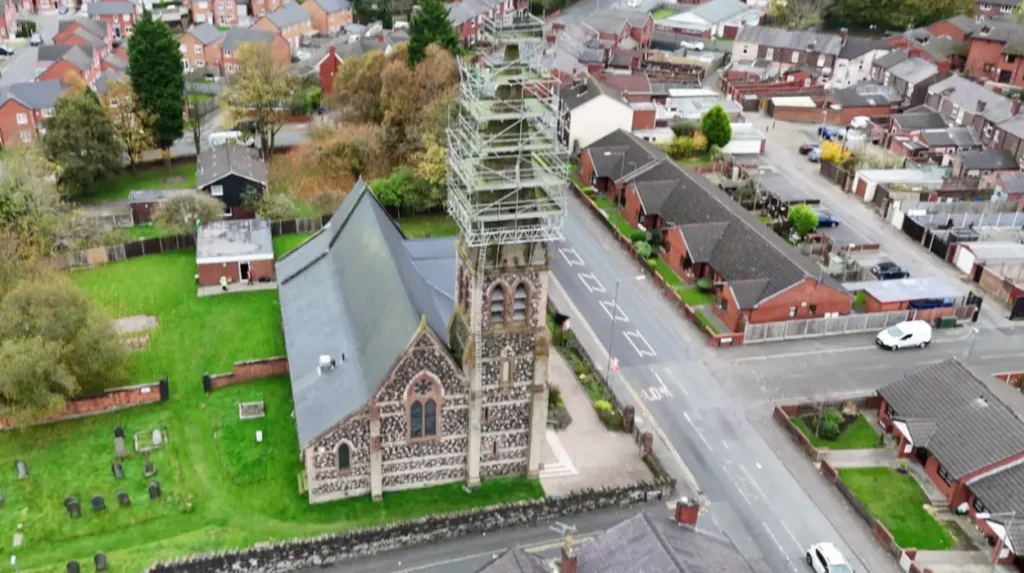
St Helens’ legacy endures in 147 listed buildings and 12 scheduled monuments, including the Grade II Friends’ Meeting House (1678), Quaker site with a 1753 sundial and glacial boulder. St Mary’s Lowe House Church (1929), the “Poor Man’s Cathedral,” features a 47-bell carillon and 130-foot tower blending Romanesque and Gothic styles.
Windleshaw Abbey ruins and the Beecham Clock Tower (now St Helens College) evoke industrial barons, while the World of Glass museum celebrates Pilkington’s innovations. Rugby league icons like St Helens R.F.C.’s Totally Wicked Stadium draw global fans, with 3 World Club Challenge wins underscoring sporting fervor.
Demographics and Modern Economy
Home to 117,308 in the town and 183,200 borough-wide (2021 Census), St Helens features a stable, aging population with 74.4% employment rate for ages 16-64 as of late 2023, surpassing North West averages. Its £2.7 billion economy, down 7.3% since 2010, relies on wholesale/retail (11,000 jobs), manufacturing, and health/education, concentrated in the town center and Haydock Industrial Estate.
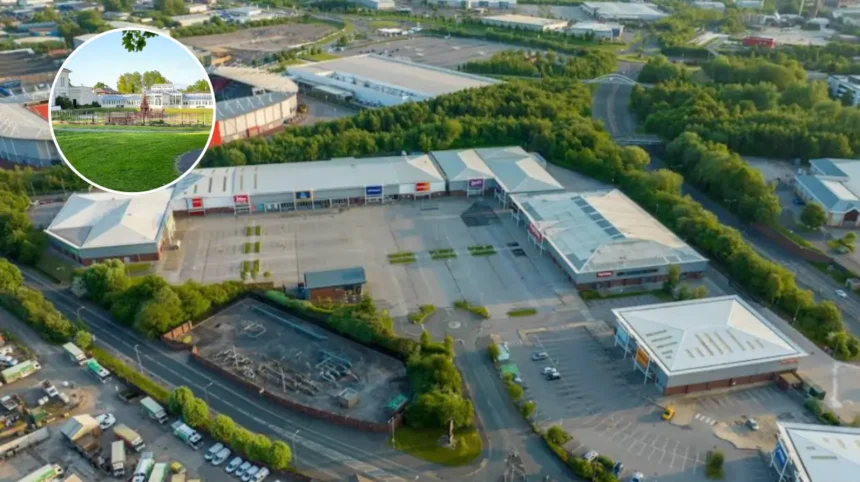
Deprivation lingers from industrial decline, yet regeneration thrives: Church Square and Hardshaw Centre anchor retail with Asda, Tesco Extra, and independents; Ravenhead Retail Park hosts majors. Pilkington remains the sole heavy industry giant.
Regeneration and Future Prospects
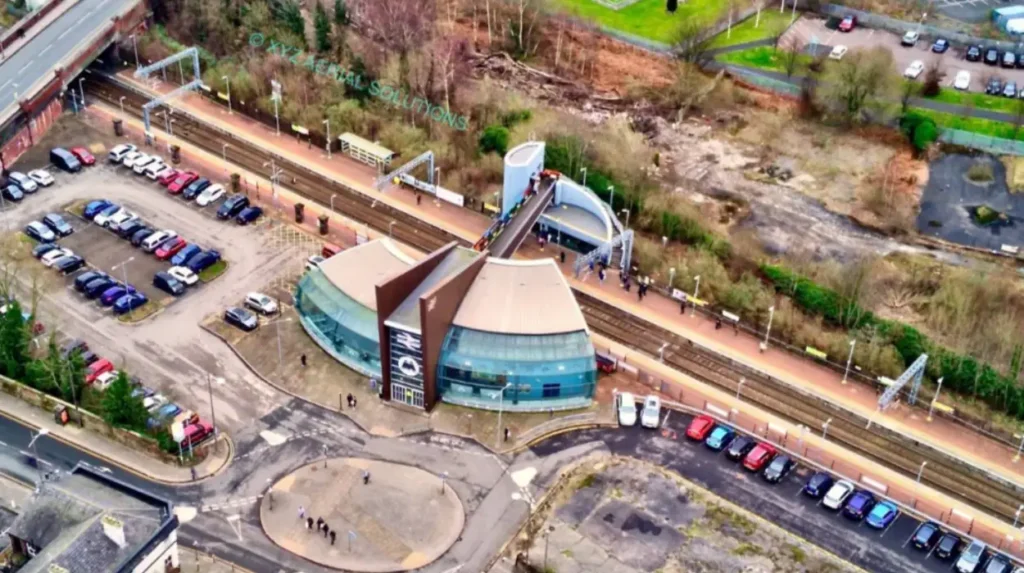
Post-1990s mine closures (Sutton Manor last in 1991), initiatives like Brand New St Helens (2007) rebuilt colleges and parks. Re:new schemes revived Parr’s Duckeries and Gaskell Park to Green Flag status. Recent English Cities Fund partnerships demolish outdated sites for a 120-bed hotel, 65 homes, market hall, and transport interchange merging bus/rail hubs.
The 2010 St Helens Linkway enhanced M62 access, while zero-emission trials and Liverpool City Region ties boost connectivity. Urban forests and Carr Mill Dam’s trails promote green living, positioning St Helens as “The Heart of the North West.”
Sports and Community Spirit
Rugby league pulses through St Helens’ veins, with St Helens R.F.C.—19-time Super League champions—fostering community pride at their 18,000-capacity stadium. Museums like the North West Museum of Road Transport preserve canal and rail heritage, drawing families to explore glassblowing demos and Dream’s kinetic sculptures.
Events at Victoria Park and Billinge Hill viewpoints sustain traditions, blending history with vitality. As regeneration unfolds, St Helens exemplifies resilience, its coal-forged foundations supporting a forward-looking community.