

Formby, a picturesque coastal town just north of Liverpool, captivates with its pristine beaches, ancient dunes, and rich natural heritage. Nestled in the Metropolitan Borough of Sefton, this commuter haven offers a perfect blend of tranquility and accessibility for Liverpool residents seeking an escape.
- Origins and Ancient Roots of Formby
- Medieval to Victorian Transformation
- Formby in the World Wars and Modern Era
- Stunning Natural Beauty and Biodiversity
- Premier Attractions and Outdoor Pursuits
- Community and Lifestyle in Formby
- Seamless Connections to Liverpool
- Economy, Sports, and Cultural Vibrancy
- Why Formby Endures as an Evergreen Destination
Origins and Ancient Roots of Formby
Formby’s story begins millennia ago, etched into the mudflats of its beaches. Erosion has revealed over 9000-year-old human footprints alongside those of deer, wolves, and even lynx, dating from the Mesolithic to Neolithic periods around 8000 to 5000 years ago. These prehistoric traces, uncovered and reburied by tides, highlight how early hunter-gatherers navigated this dynamic coastal landscape, with sea level rises around 5500 years ago transforming the environment and boosting human activity.
The name Formby derives from Old Norse “Fornebei,” meaning “the old settlement” or “village of Forni,” reflecting Viking incursions around 960 AD from Ireland. Vikings likely settled after failing to conquer local Anglo-Saxons along the coast, pushing inland via the River Alt. The Domesday Book of 1086 records three manors under “Fornebei” – Halsall, Walton, and Poynton – marking its early agrarian significance.
By the medieval era, Formby Hall, a Grade II listed building from 1223, emerged as the manor lords’ residence, now surrounded by golf courses. St. Luke’s Church site hints at even older roots, possibly a medieval chapel destroyed by a 1739 sandstorm, with Catholic burials noted in the early 19th century. These layers of history position Formby as a timeless link to Britain’s prehistoric and Norse past, drawing history enthusiasts from Liverpool.
Medieval to Victorian Transformation
Entering the post-medieval period, Formby’s economy revolved around coastal trades like cockle raking and shrimp fishing, persisting into the 19th century. The township expanded to include chapelries of St. Peter’s and St. Luke’s, alongside hamlets like Raven-Meols, forming a sub-district by 1872. Lifeboat operations pioneered here, with Britain’s first station established around 1776 by Liverpool’s William Hutchinson using a Mersey Gig; its final launch in 1916 left enduring foundations on the beach.
Industrial stirrings arrived with the railway, enhancing Liverpool connectivity. Formby Urban District governed independently until 1974, when it joined Sefton’s Metropolitan Borough in Merseyside. Victorian growth saw population swells, supported by agriculture on the West Lancashire Coastal Plain, with sandy soils ideal for farming amid green belt protections.
This era solidified Formby’s dual identity: a rural outpost for Liverpool commuters and a budding resort, setting the stage for 20th-century preservation efforts.
Formby in the World Wars and Modern Era
World War II cast a shadow over Formby, with fears of Nazi invasion targeting its flat beaches near the Mersey estuary. British forces dug trenches at Formby Golf Club in 1939, led by Major Austin Cartmell of the King’s Liverpool Regiment. RAF Woodvale, opened in 1941 north of town, hosted fighter training and the last operational Supermarine Spitfire flight in 1957; it now supports light aircraft and hosts the Woodvale Rally.
Post-war, the 1967 Enterprise Neptune campaign enabled the National Trust to acquire 574 miles of coastline, including Formby’s northern shore and sandhills – the North West’s first such purchase. This preserved dunes and woods against development, fostering tourism. Today, Formby Parish Council, serving 24,000 residents across Harington and Ravenmeols wards, collaborates with Sefton Council on a Neighbourhood Development Plan emphasizing green spaces, low-rise housing, and flood resilience.
From Viking byr to protected haven, Formby’s evolution mirrors Liverpool’s broader regional story.
Stunning Natural Beauty and Biodiversity
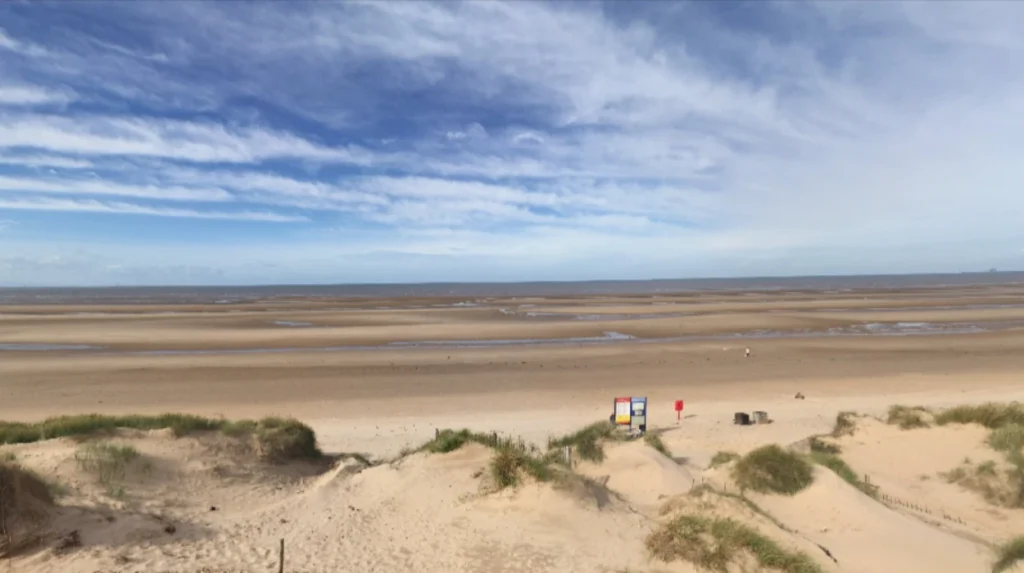
Formby’s coastline dazzles with expansive sandy beaches backed by shifting dunes, pinewoods, and slack pools. The National Trust’s management designates it a Site of Special Scientific Interest and Special Area of Conservation, safeguarding rare habitats. Victoria Road and Lifeboat Road access points lead to forested trails where endangered red squirrels thrive, though grey squirrel competition and past squirrelpox outbreaks challenge populations – sightings remain possible but rarer.
Natterjack toads, among England’s few breeding sites, chorus from dune slacks in spring, their “Bootle Organ” call echoing evenings. Storms occasionally erode dunes, exposing new cliffs but rangers use Christmas trees to stabilize them. Prehistoric footprints reemerge seasonally, blending ancient mystery with vibrant ecology – a must-visit for Liverpool nature lovers.
The River Alt marks the southern boundary, feeding wetlands teeming with waders, while marram grass and deciduous woods enhance biodiversity.
Premier Attractions and Outdoor Pursuits
Formby Beach headlines attractions, with vast sands ideal for walks, ideal for day trips from Liverpool. The Red Squirrel Reserve at Victoria Road offers feeding stations amid pines, paired with the Asparagus Trail celebrating local heritage. Formby Point provides wilder dunes and wildlife spotting, including northern tiger beetles unique to Merseyside.
Golf enthusiasts flock to Formby Golf Club, redesigned by Willie Park Jr. in 1912 and tweaked by James Braid, rivaling Royal Birkdale. RAF Woodvale’s rally draws aviation fans, while Deansgate Lane fields host Formby Junior Sports Club, echoing Jim Rourke’s 1959 legacy. Lifeboat Road’s caravan park adds seasonal stays, with beaches charging for parking to fund conservation.
These spots create endless exploration, from fossil hunts to stargazing.
Community and Lifestyle in Formby
Formby’s village center thrives along Chapel Lane and Brows Lane, boasting independents, Boots, Costa, and supermarkets like Waitrose and Tesco. No heavy industry marks it; a small estate hosts McDonald’s, with 10-30% commuting to Liverpool or Southport. High employment (85% of 16-64s) and above-average incomes (£40k+ households 7% higher than Sefton’s) reflect affluence.
Education shines with seven primaries like Formby High and Range High, fostering family appeal. Scouting dates to 1909, marching on St. George’s Day. The Parish Council’s monthly meetings at Formby Library invite public input, driving initiatives like cycling improvements. Footballers like Steven Gerrard and Jürgen Klopp have called it home, adding celebrity allure.
This close-knit vibe suits Liverpool commuters craving suburbia.
Seamless Connections to Liverpool
Merseyrail’s Northern Line links Formby and Freshfield stations to Liverpool Central every 15 minutes, a 27-minute ride costing £4-7. Buses via Arriva and Stagecoach reach the city in under an hour. The A565 Formby Bypass eases road access, despite past accidents, with M57/M58 nearby.
Cycling paths hug the coast to Liverpool, ideal for eco-commutes. Liverpool John Lennon Airport lies 17 miles south, Manchester 36 miles. These ties make Formby Liverpool’s effortless coastal extension.
Economy, Sports, and Cultural Vibrancy
Tourism fuels Formby May-September, drawing North West day-trippers to beaches and reserves. Retail dominates “The Village,” with post offices and specialists. Sports abound: Formby Cricket Club in Liverpool competitions, past Formby F.C. (“The Squirrels”) in North West Counties. Formby Pool opened 2007 on old football grounds.
Notables include novelists Beryl Bainbridge, MPs like Angela Eagle, and musicians like Rhian Teasdale. Media via BBC North West, Liverpool Echo keeps pulses racing. Formby Civic Society preserves heritage through walks.
Why Formby Endures as an Evergreen Destination
Formby’s blend of ancient footprints, squirrel woodlands, championship golf, and Liverpool proximity ensures lasting appeal. The Neighbourhood Plan secures its green future, from downsizing homes to flood defenses. Whether hiking dunes or village strolling, it offers serene contrast to urban Liverpool – a timeless retreat for all.